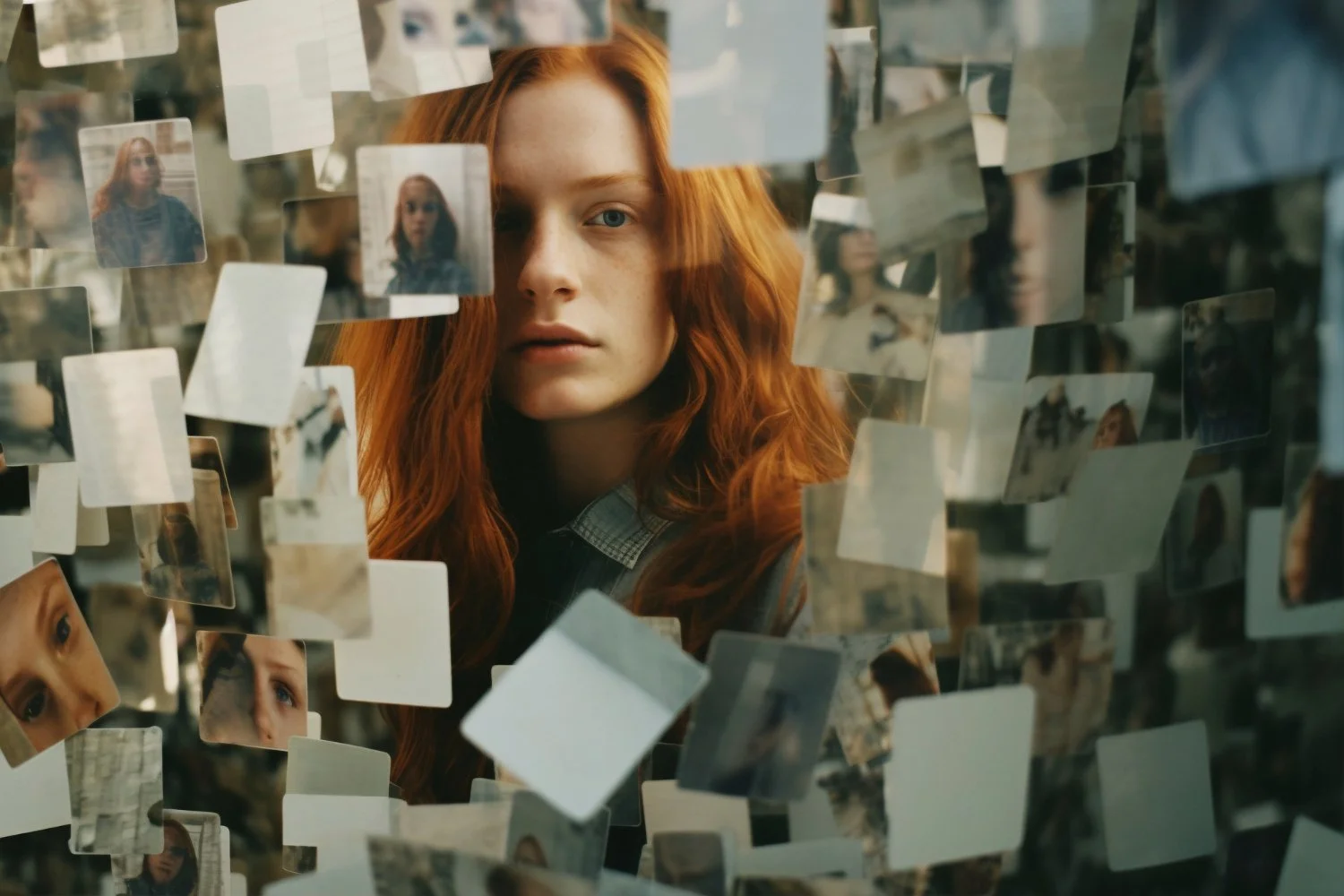
People with aphantasia, who cannot form pictures in their mind, remember fewer details of events from their own lives than people with typical imagery.
In one study, 30 people with aphantasia and 30 people without it were asked to describe past experiences and imagine future ones, and the aphantasia group gave noticeably less detail for both (Dawes et al., 2022).
This phenomenon matches something that many people aphantasia with have long noticed without having a name for. They know what happened at their graduation or on a childhood holiday. They just do not seem to go back there the way other people describe.
Knowing the past versus reliving it
Memory researchers distinguish between two kinds of remembering.
One is knowing facts about your life: where you grew up, who was at your wedding, what you studied.
The other kind, often called episodic memory (the sense of mentally returning to a specific moment), involves re-experiencing the scene itself, often with images, sounds and feelings.
Visual imagery appears to do much of the work in that second kind. Without it, a memory can arrive as a list of facts rather than as a scene. The facts are often accurate. What is missing is the sense of being back there.
What people with aphantasia report
In a larger questionnaire study, 267 people with aphantasia and more than 400 people with typical imagery answered questions about memory, imagination and dreaming (Dawes et al., 2020). People with aphantasia reported more difficulty recalling their past, more difficulty imagining the future, and fewer and less vivid dreams. About a quarter of them also reported reduced imagery in other senses, such as sound or touch.
Not everyone with aphantasia has a poor memory for their own life, and many people with aphantasia lead full, well-remembered lives in the factual sense. The difference is in texture more than in accuracy.
Why the past can feel distant
A memory that comes back as facts can feel oddly impersonal, as if it belongs to a slightly different person. This can surface in ordinary ways: a partner who can replay a shared trip in detail, a sibling who describes a childhood home room by room, a friend who is moved by an old photograph in a way that feels unfamiliar.
It can also matter in grief. People who lose someone close often find comfort in picturing them, and someone with aphantasia may worry that not being able to see a loved one's face means they have forgotten them, or loved them less. That conclusion does not follow. What remains (what the person said, what they cared about, how it felt to be around them) is still memory, held in a different form.
Ways to hold on to memories without pictures
If you tend to remember experiences as facts rather than vivid memories, it helps to write down the details while they're still fresh. A few lines in a journal after a trip or an important day can preserve things you might otherwise forget, like who was there, what you talked about, what made you laugh or what was on your mind at the time.
Photographs are useful too. Even if looking at a photo doesn't bring back the feeling of being there, it still gives you a record of what happened. Adding a short caption about the people, the occasion or what was happening in your life at the time makes that record more useful years later.
Voice recordings preserve things that are harder to capture in writing or photographs. A recording of your child talking at four years old, a parent telling a family story or a friend's laugh lets you hear those moments again exactly as they sounded. These recordings can become especially valuable after someone has died.
Talking to people who were there can also help. A sibling, partner or old friend may remember details of a shared experience that you've forgotten. Hearing their version of a story can fill in some of the gaps in your own memory.
Keeping these records gives you something to return to later, even when you can't remember much of the original experience yourself.
When counselling assumes a mental picture
Several well-established counselling techniques are built around imagery.
Guided relaxation often begins by asking you to picture a calm place. Some trauma-focused approaches, such as EMDR (eye movement desensitization and reprocessing), ask you to bring a memory to mind and hold the image while you work with it. Imagery rescripting, used for nightmares and painful early memories, asks you to see a scene and then imagine it unfolding differently.
For someone with aphantasia, each of these instructions contains a step that may not happen. You hear “picture the room” and find nothing there, then spend the rest of the exercise wondering whether you are trying hard enough. Because people rarely compare what goes on inside their heads, some only discover as adults that others take “picture it” literally.
The difficulty is rarely visible from the outside. A counsellor may see someone who is quiet, or who says an exercise did not do much, and both people can reach the wrong conclusion: that the approach does not suit you, or that you are holding back. The instruction assumed a kind of imagery you do not have. That says something about the method, and nothing about your effort.
What to tell your counsellor about aphantasia
Telling your counsellor early that you have aphantasia, or suspect you do, allows the work to start from how your memory actually works. You do not need a formal assessment to raise it.
Researchers usually identify aphantasia with a short questionnaire about how vividly you can picture familiar scenes and faces (Dawes et al., 2020), and “when I try to picture something, nothing appears” is enough to begin the conversation.
A few details make that conversation more useful. Aphantasia varies: some people have no visual imagery at all, some have faint images, and some lack imagery in other senses as well. It also helps to describe how memories do arrive for you, whether as facts, as words, as a feeling in the body, or as a sense of what something meant.
If you also have little or no inner voice, sometimes called anendophasia, mention that too, since some exercises assume you can notice your thoughts as words.
Much of counselling does not depend on imagery. Talking through what happened, writing out a timeline, describing what you knew and felt at the time, and noticing what your body does in the present all work with memory in the forms you have. A counsellor who knows about your aphantasia can choose these routes from the start, instead of discovering halfway through an exercise that its first step was never available to you.
The past is still there to work with. It arrives in a different form.
Frequently asked questions about aphantasia and memory
Does aphantasia affect memory? Research suggests that people with aphantasia recall fewer details of their own past experiences, although their general memory for facts tends to be unaffected. The difference is mainly in how vividly events are relived (Dawes et al., 2022).
Why can I remember facts about my life but not relive them? Reliving a memory appears to depend heavily on visual imagery. Without it, memories tend to return as knowledge about what happened rather than as a scene.
Do people with aphantasia dream? Many do, and some dream in images even without voluntary imagery while awake. People with aphantasia do report fewer and less vivid dreams on average (Dawes et al., 2020).
Is aphantasia a memory disorder? No. It is a difference in visual imagery that can shape how personal memories feel, and it is not a sign of memory loss or decline.
Can counselling help if I struggle to recall my past? Yes. Counselling can work with what you know about your history and how it affects you now, without requiring you to picture it.
About Dhaniah Wijaya, RCC
I am a registered clinical counsellor (RCC) based in Vancouver, BC with a background as a public school teacher and behavioural interventionist. I have more than a decade of experience working with neurodiverse individuals, including those with ADHD, autism, and learning disabilities.
I offer a free 20-minute consultation for you to have a sense of what it would be like to work with me, offer you a chance to ask any questions you might have, and decide if we are the right fit.